
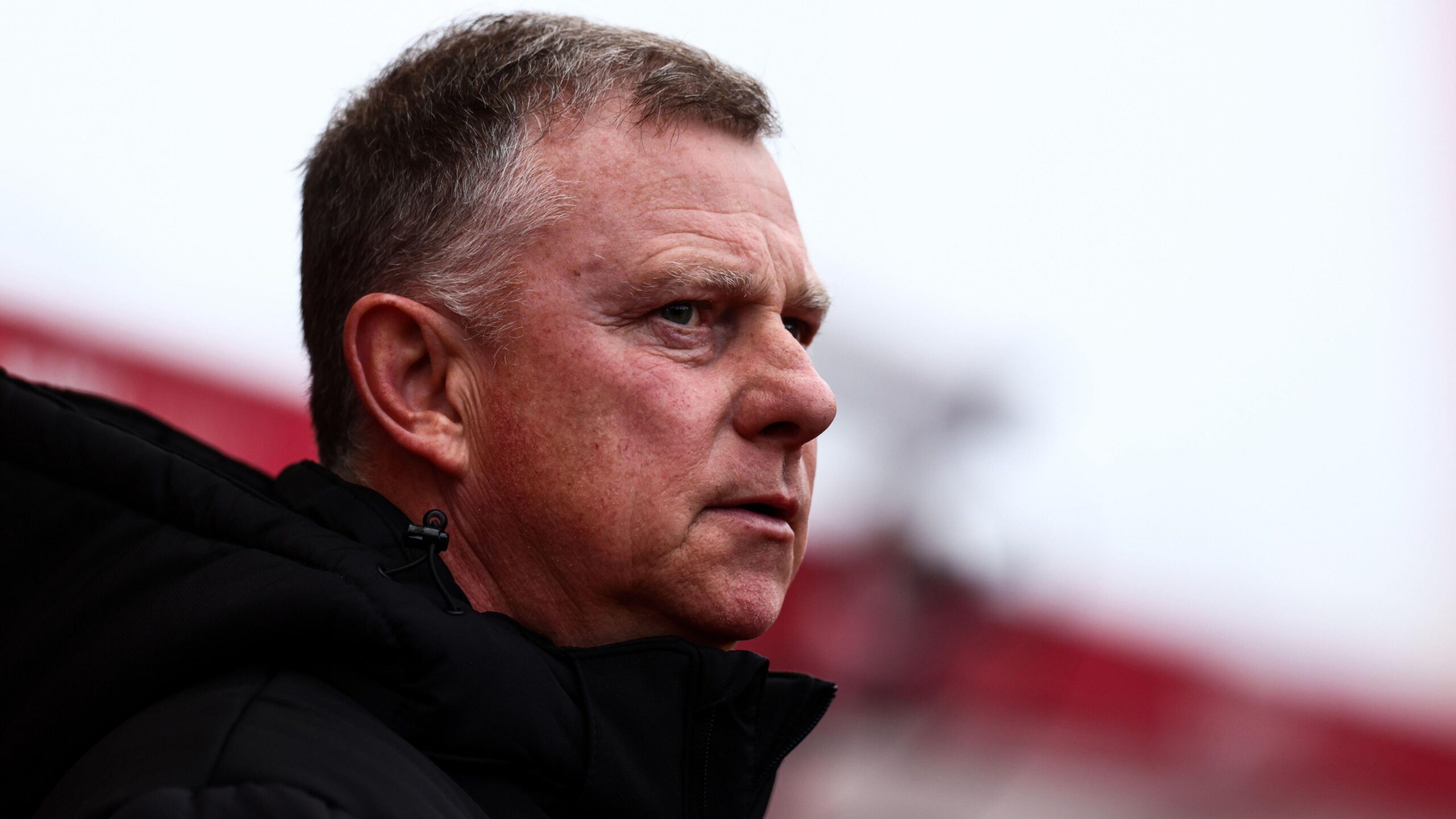
Mark Robins Outlines Major Decision After Agreeing New Long-Term Stoke City Contract That Fans Can’t Overlook
In a development that has sparked renewed optimism across the Potteries, Stoke City manager Mark Robins has not only committed his future to the club with a new three-and-a-half-year deal but has also disclosed a significant long-term decision designed to push the Potters back toward Premier League football. The announcement, made on November 21, 2025, arrived at a crucial phase of the campaign, with Stoke currently sitting third in the Championship table, trailing the automatic promotion places by just two points after 15 matches.
Robins, the 55-year-old former Manchester United hero remembered for his legendary 1990 FA Cup goal, revealed during a post-signing interview that he will take direct responsibility for shaping the club’s youth development pathway. Over the next year, he plans to integrate young academy players into the senior squad, describing the move as a non-negotiable step driven by supporter demands for sustainability rather than short-lived success through heavy spending.
The new contract will keep Robins at the bet365 Stadium until the summer of 2028. Club chairman John Coates described the extension as “a powerful statement of confidence in our long-term direction.” Speaking from the Clayton Wood training ground, Coates added that Robins had already transformed the club’s mentality and competitive edge since his arrival. He highlighted not only the renewal of Robins’ deal, but also the extensions of key backroom figures including Paul Nevin, James Rowberry, Ryan Shawcross, and Darren Behcet, describing them as the backbone of the club’s rebuild. According to Coates, Robins’ academy focus aligns perfectly with Stoke’s vision of future-proofing the squad.
Robins’ path to this moment has been shaped by adversity and reinvention. When he took charge on New Year’s Day 2025, Stoke were struggling in 18th position, hovering just four points above the relegation places after a turbulent run under the previous regime. Injuries, low confidence, and tactical confusion plagued the squad. In his first half-season, Robins stabilised the side using disciplined defensive structures and calculated counter-attacking football, steering Stoke to safety on the final day with a crucial 2–1 victory over Plymouth Argyle.
This season, however, has seen Stoke shift from survival mode to genuine promotion challengers. With additions like experienced defender Aaron Cresswell and dynamic winger Million Manhoef settling quickly, the Potters have become one of the most efficient teams in the division. Their defensive record, conceding only 12 goals so far, stands as the best in the Championship and reflects the structural discipline Robins has instilled.
Despite the improved results, many supporters longed for more than just a promotion push. After years of mid-table stagnation and short-lived rebuilds, fans called for a stronger identity rooted in the club’s own talent pipeline. Robins addressed this sentiment directly. Speaking on BBC Radio Stoke, he explained that his decision to become hands-on with the academy reflects his belief in building a lasting football culture rather than chasing quick fixes.
He outlined concrete plans, including direct involvement in youth training sessions, talent identification, and development frameworks. His target is to bring at least three U-23 players into first-team contention by next summer, creating a bridge between the academy and the senior squad. Robins emphasized that this approach would reduce reliance on short-term transfers while strengthening the club’s identity and long-term competitiveness.
Behind the scenes, club insiders suggest that Robins has already pinpointed several promising prospects, including 18-year-old midfielder Kai Johnson, whose tireless energy and versatility have impressed within the youth system, and striker Ellie-May Wright, who has recorded 15 goals in 12 youth matches and drawn early comparisons with former Stoke forward Peter Crouch.
This shift also represents a clear departure from Stoke’s recent heavy spending strategy, which saw the club invest more than £20 million over the last two transfer windows with inconsistent outcomes. Sporting director Jon Walters, a former fan favourite and Ireland international, publicly supported Robins’ direction. Walters described the manager as a long-term builder, noting that the club’s goal is to achieve a 30% youth integration rate in the senior squad by 2026 while reducing dependency on loan players and ageing free agents.
The timing of Robins’ announcement adds an extra layer of emotion. Only days earlier, Stoke suffered a narrow 1–0 defeat against his former club Coventry City, now led by Frank Lampard. A late strike from Haji Wright dropped Stoke from second to third place, yet confidence around the squad remains strong. With 28 points from 15 games and an impressive positive xG differential, Stoke are still firmly in the promotion conversation as they prepare for a huge away clash at Leicester City on November 29.
Supporter reaction has been overwhelmingly positive. Social media buzzed with praise following the announcement, with one fan, known online as @OwdPotter1935, describing Robins’ approach as “exactly what this club has been missing for years.” The post quickly gained traction, capturing a fanbase eager for stability, identity, and a long-term vision.
Beyond tactics and strategy, Robins’ connection with Stoke is built on relationships and shared values. Despite his Manchester United roots, he has embraced life in the Potteries and spoken openly about the club’s authentic spirit. In interviews with the Stoke Sentinel, Robins praised both the board’s directness and the supporters’ unwavering loyalty, calling them “the heartbeat of the football club.” He framed his academy decision as a personal commitment to give something lasting back to the community.
As the January transfer window approaches, speculation continues over potential squad changes. While one or two loan arrivals remain possible to strengthen depth, the academy focus suggests some experienced fringe players could be moved on to clear pathways for emerging talent. Analysts have already responded positively, with data models upgrading Stoke’s promotion chances to nearly 70%, citing their consistent form and strong performances following international breaks.
However, Robins remains cautious. He acknowledged that setbacks are part of the journey, pointing to recent dropped points as reminders of how demanding the Championship remains. For him, this project is not just about one season, but about laying foundations that will sustain Stoke for years.
For supporters who still remember the Premier League glory days under Tony Pulis — the European nights, the Shawcross leadership, the Crouch and Walters partnerships — the years of absence since 2018 have been painful. Multiple managerial changes and unfulfilled rebuilds left deep frustration. Robins’ arrival initially felt like a stabilising move, but his contract extension and academy pledge have transformed it into something much larger: a statement of long-term intent.
As winter approaches and the bet365 Stadium prepares for another demanding period of fixtures, Stoke City finds itself at a defining crossroads. Robins’ decision to invest deeply in youth development ensures that, even if promotion does not come immediately, the framework for future success will remain intact.
For fans in the stands and those following from afar, this is more than just a contract renewal. It represents a renewed belief — a promise that Stoke City’s future will be built not just on results, but on identity, development, and homegrown ambition. In the heart of the Potteries, where tradition and pride run deep, Mark Robins is doing more than managing a team — he is reshaping the club’s long-term destiny.