Phillies Front Office Holds the Line: Bryce Harper to Remain in Philadelphia Despite Heavy Trade Speculation
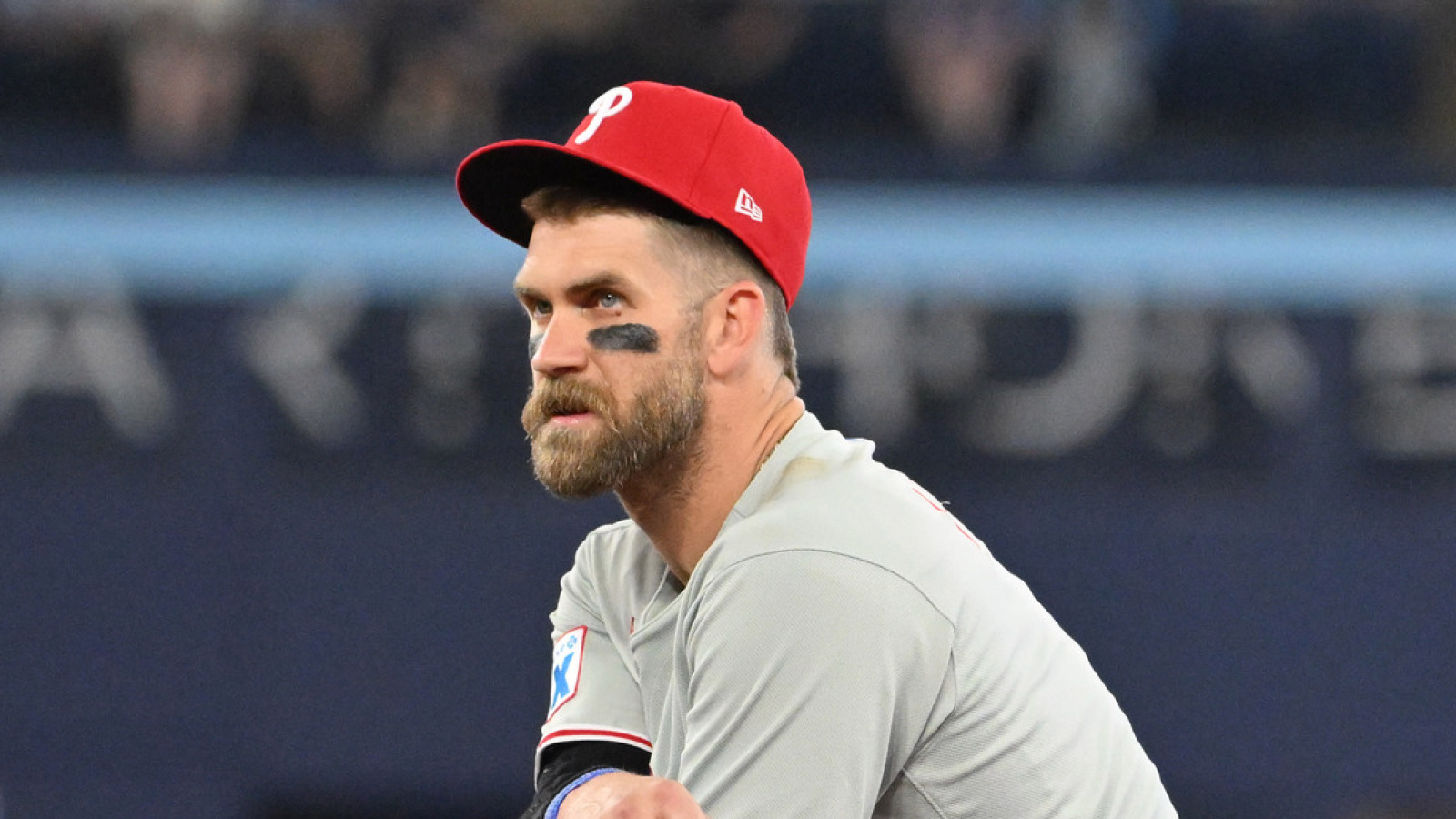
PHILADELPHIA – In a decision that has sent noticeable shockwaves across the MLB offseason landscape, the Philadelphia Phillies have officially ended months of uncertainty surrounding superstar first baseman Bryce Harper, revealing on Friday that the cornerstone of their franchise will continue wearing red pinstripes for the foreseeable future. The move, characterized by Phillies president of baseball operations Dave Dombrowski as a “strategic commitment to stability,” follows a frustrating 2025 campaign and a flood of trade rumors that kept fans and analysts in suspense. With Harper now entering the eighth year of his historic 13-year, $330 million deal, this declaration not only steadies the Phillies’ lineup but also reinforces their competitive ambitions in a fiercely contested NL East.
The announcement came during a media session at Citizens Bank Park, with Dombrowski joined by owner John Middleton and general manager Sam Fuld as they detailed the organization’s reasoning with clarity and conviction. “Bryce Harper represents more than just production; he is central to our identity,” Dombrowski stated as cameras clicked in the background. “We analyzed every scenario – analytics, payroll structure, and the overall market landscape – and it simply didn’t justify moving him. Yes, he’s 33, but his résumé and impact speak louder than numbers on paper. Our direction is to build with him, not replace him.” Middleton echoed that sentiment, emphasizing the emotional and strategic bond between player and city. “Bryce committed to us. We committed to him. And we’re reaffirming that commitment today. This isn’t about nostalgia, it’s about a long-term plan.”
To grasp the weight of this decision, you have to look back at the Phillies’ 2025 season, which started with championship aspirations and ended in disappointment. Entering spring training as reigning NL champions, Philadelphia fielded a star-packed roster with Harper at first, Kyle Schwarber in left, Trea Turner at short, and a rotation led by Zack Wheeler and Aaron Nola. However, adversity struck early. Injuries mounted, including a lingering wrist problem that limited Harper to 128 appearances. His final numbers – a .268 average, 28 home runs, 82 RBIs, and an .821 OPS – were respectable, but below the lofty standards set by the $25.4 million-a-year slugger.
Harper’s slight regression mirrored a wider team struggle. The Phillies finished 88–74 and were eliminated by the Milwaukee Brewers in a deflating Wild Card sweep. The exit intensified questions that had been building all season: Was Harper entering a decline phase? Dombrowski’s honest post-season comments only added fuel. Speaking in October on the “Foul Territory” podcast, he admitted Harper “wasn’t at an elite level this year,” sparking widespread debate across sports media. Though meant as constructive criticism, many fans and pundits viewed it as a potential signal that trade discussions were on the horizon.
Soon, speculation exploded. Bleacher Report columnist Zachary D. Rymer proposed a blockbuster scenario involving a Harper trade to the Chicago Cubs for top prospects Owen Caissie and Jaxon Wiggins, suggesting Chicago’s need for star power made it plausible. Yahoo Sports entertained the idea of a reunion with the Boston Red Sox, considering Harper’s ties to the Northeast. More outlandish rumors even linked him to the New York Yankees, reviving memories of his 2019 free-agency saga. According to Phillies Nation, Harper was personally affected by the noise. “It brought back a lot of bad memories from Washington,” he told The Athletic. “I’ve been all-in on Philly from day one, and then suddenly I’m in trade rumors again? That stung.”
Internally, though, the Phillies remained methodical. Dombrowski, known across baseball for his bold trade history with Detroit and Boston, assembled his inner circle in the weeks after the playoff loss. Their focus: Harper’s underlying performance indicators. Advanced data showed he still posted a 3.2 WAR, though his average exit velocity dipped from 93.4 mph in 2024 to 91.2 mph, and his hard-hit percentage dropped to 45.3% from 48.1%. Financial considerations were just as significant. Trading him would free roughly $190 million in future salary, but it would also mean losing one of the league’s most marketable stars. Team figures estimated that Harper merch alone generated more than $10 million last season.
Market reality also reduced trade viability. Sources around the league suggested that while teams like the Cubs, Red Sox, and Dodgers made preliminary calls, interest lacked serious financial commitment. No franchise was willing to take on Harper’s full contract without Philadelphia adding incentives, and the Phillies’ front office refused to undermine a farm system already ranked 18th by MLB Pipeline. “Every scenario we ran put us in a worse position next season,” Fuld explained. “And even aside from that, Bryce controls his future with his no-trade clause. But regardless, for us, this wasn’t even close to happening.”
While he did not appear in person at the press conference, Harper released a statement through the team afterward, making his stance crystal clear. “Philadelphia is home for me and my family. This is where I want to finish what we started,” he said. “The rumors hurt, but they also motivated me. I’m locked in on bringing another title here.” His reaction aligned with his offseason interview on WHYY, where he dismissed trade talk as “nonsense.” After declining his opt-out clause last year, Harper essentially bet on the organization’s vision — and Friday’s announcement confirms that belief.
The impact of this decision stretches far beyond first base. From a roster standpoint, it gives Dombrowski flexibility to focus on strengthening other areas, especially the bullpen and outfield. The Phillies have been linked with potential pursuits of high-profile players like Juan Soto and a possible Jeff Hoffman return, using resources not allocated to major contract overhauls. Strategically, it keeps division rivals like Atlanta and New York on high alert. While Ronald Acuña Jr. continues to dominate headlines, Harper’s leadership, two MVP awards, and playoff pedigree bring an edge only a few players can provide in October.
Off the field, the decision is equally significant. Philadelphia fans, still wary after past franchise departures, value loyalty deeply. Attendance numbers dipped slightly in 2025, but keeping Harper is expected to reignite passion around the club. “He’s not just a star, he’s part of the city now,” said longtime season-ticket holder Maria Gonzalez. “Moving him would’ve crushed people. Keeping him shows they believe in this team.” For a fanbase that thrives on connection, this move reinforces stability and trust.
Not everyone is sold, however. Some baseball analysts argue the Phillies are committing too heavily to an aging core. Critics point to Harper’s contract, which rises to $30 million annually by 2029, as a long-term risk. ESPN’s Jeff Passan summarized it bluntly on social media, calling it “a smart but conservative move in a league built for youth.” Still, Dombrowski addressed such concerns directly, outlining a targeted development plan for Harper that includes advanced injury prevention, biometric monitoring, swing optimization with Kevin Long, and increased flexibility between first base and designated hitter to reduce strain.
As the GM Meetings concluded in Las Vegas, attention turned toward whether Harper can return to peak form. Analysts at NBC Sports Philadelphia noted he posted a .912 OPS after the All-Star break, suggesting a healthy offseason could restore elite production levels. Adjustments to his stance, conditioning, or training program could push him back above 35 home runs and 100 RBIs in 2026.
Ultimately, the Phillies’ stance on Harper represents more than a roster choice — it’s a message. In a winter defined by upheaval, blockbuster moves, and constant reshuffling across the league, Philadelphia chose consistency over chaos. At a time when stars are constantly on the move, they made a statement: Bryce Harper is still the face of this franchise. Or as Dombrowski concluded: “We’re not looking backward. We’re loading up for what’s next — and Bryce is central to that vision.”